DICOM viewer for clinics.The first 10never pay.
A native DICOM viewer running on real studies, on its way to a complete PACS. Those who arrive at first light use it free — forever.
10 seats · free for life
Where the project stands
What already runs,
and what comes next.
Akhet started as a DICOM viewer and is halfway through phase 1: the clinical core — window/level, measurements, multi-viewport, MPR — already works on real CT, MR, US, mammography and angiography studies.
What's missing is what shows up least in screenshots: the study browser, so a session doesn't start from zero, and the Windows and macOS installers, so a clinic can simply download and open it. This is the phase the first clinics join — and their practice sets the order of what comes next.
Phase 1 · working today
All of this already runs
on real studies.
Every item below exists in the code, covered by tests that run against real DICOM studies on every commit. Everything that comes next — mini PACS, server, integrations — is built on this base.
Clinical Window/Level
Presets for soft tissue, bone, lung, brain, liver and mediastinum. Mono pixels stored in 32 bits — high-range 16-bit US never overflows.
Full measurement suite
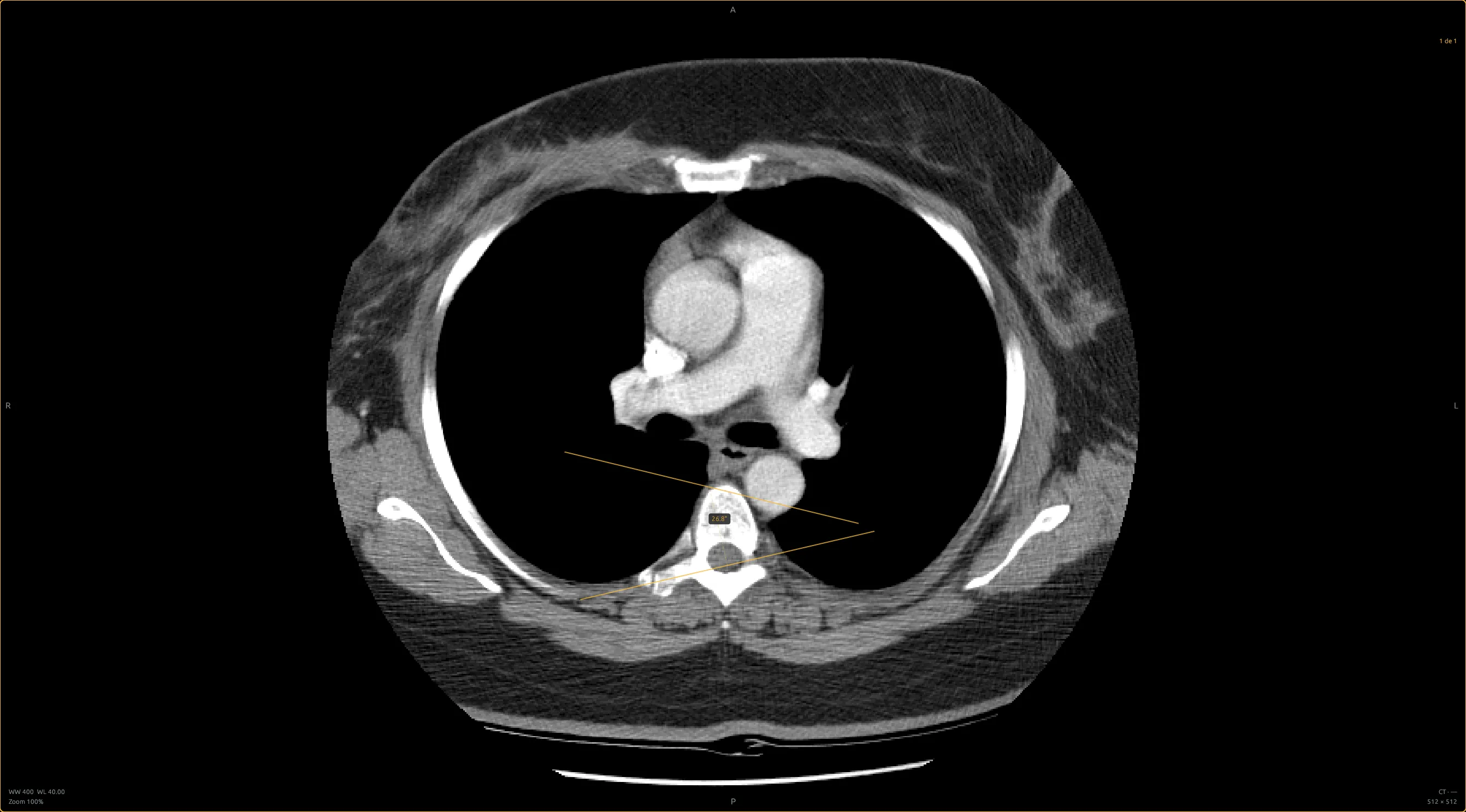
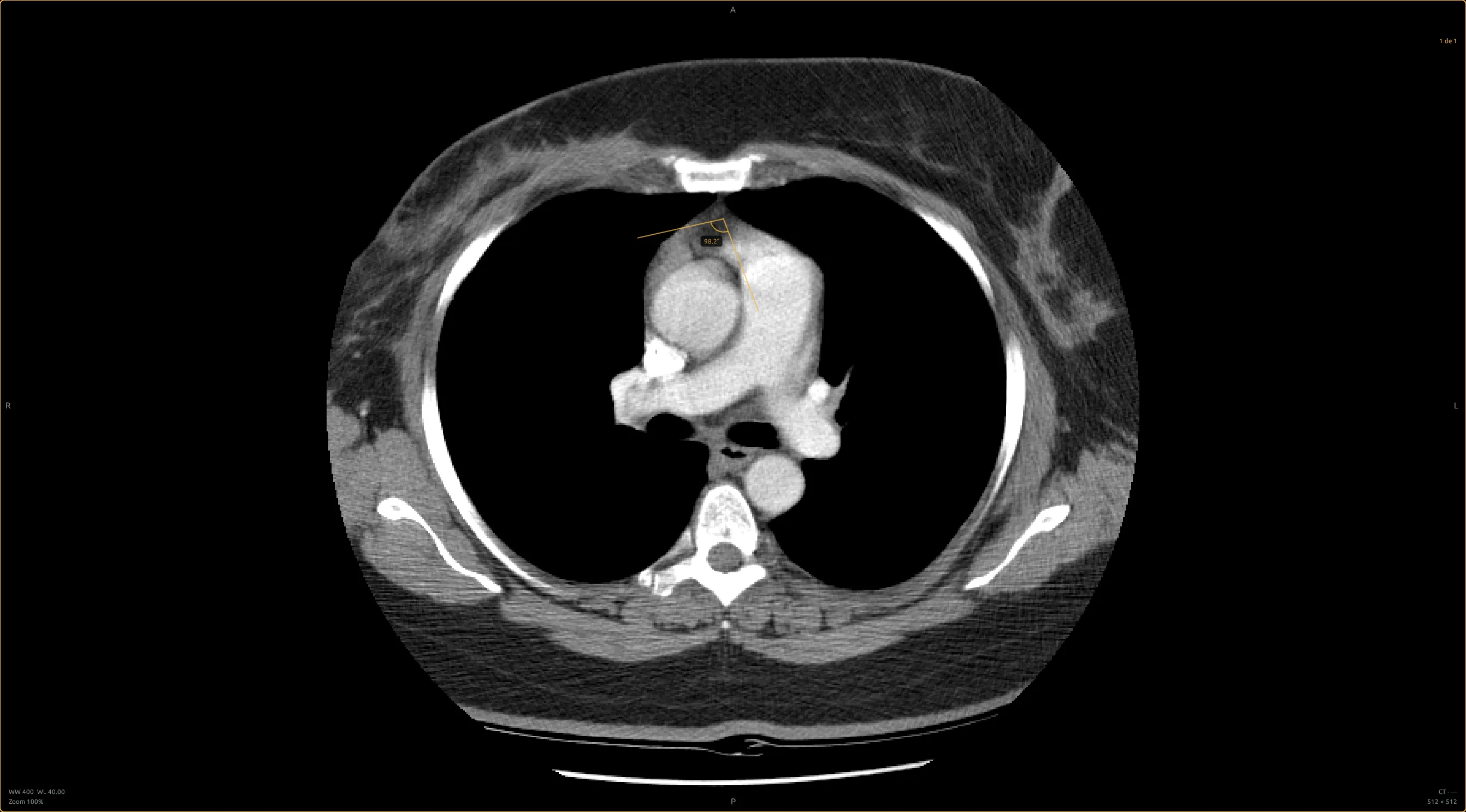
Ruler, angle, Cobb angle, deviation, ellipse, arrow, polygon and pencil — with millimeter values derived from the study's own geometry.
Multi-viewport up to 5×4
Series grouped by geometry, drag-and-drop of whole folders, per-viewport multiframe cine and cross-series reference lines.
Triplanar MPR
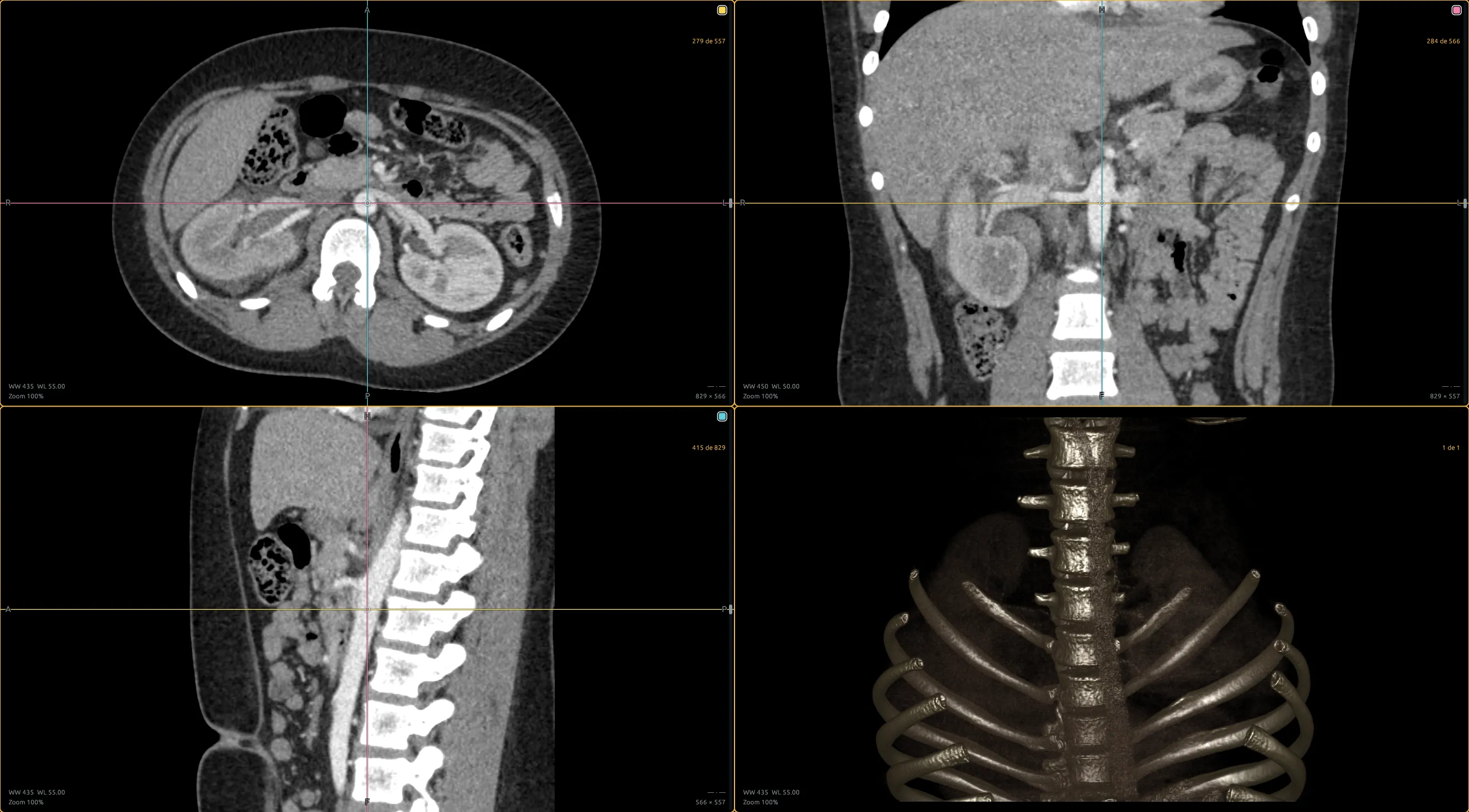
Multiplanar reconstruction in patient space with a synchronized crosshair: clicking one plane takes the other two to the same point.
14 color maps
Per-viewport LUTs rendered on the GPU, with CPU–GPU parity tests running in CI on every commit.
~48 keyboard shortcuts
Shortcut model inspired by RadiAnt. If you already read studies on another viewer, you don't start from scratch.
Native + GPU end to end
Decoding via dicom-rs and wgpu rendering with shader and LUT on the GPU. Large studies open without freezing the workstation.
PHI protected by construction
No patient name, UID or file path ever reaches a log or recorded session. The types themselves redact sensitive data in Debug.
Tested against real DICOM
204 tests over real samples of CT, MR, US, XA, mammography, scintigraphy and endoscopy — including volumetric series.
Straight from the viewer · real captures
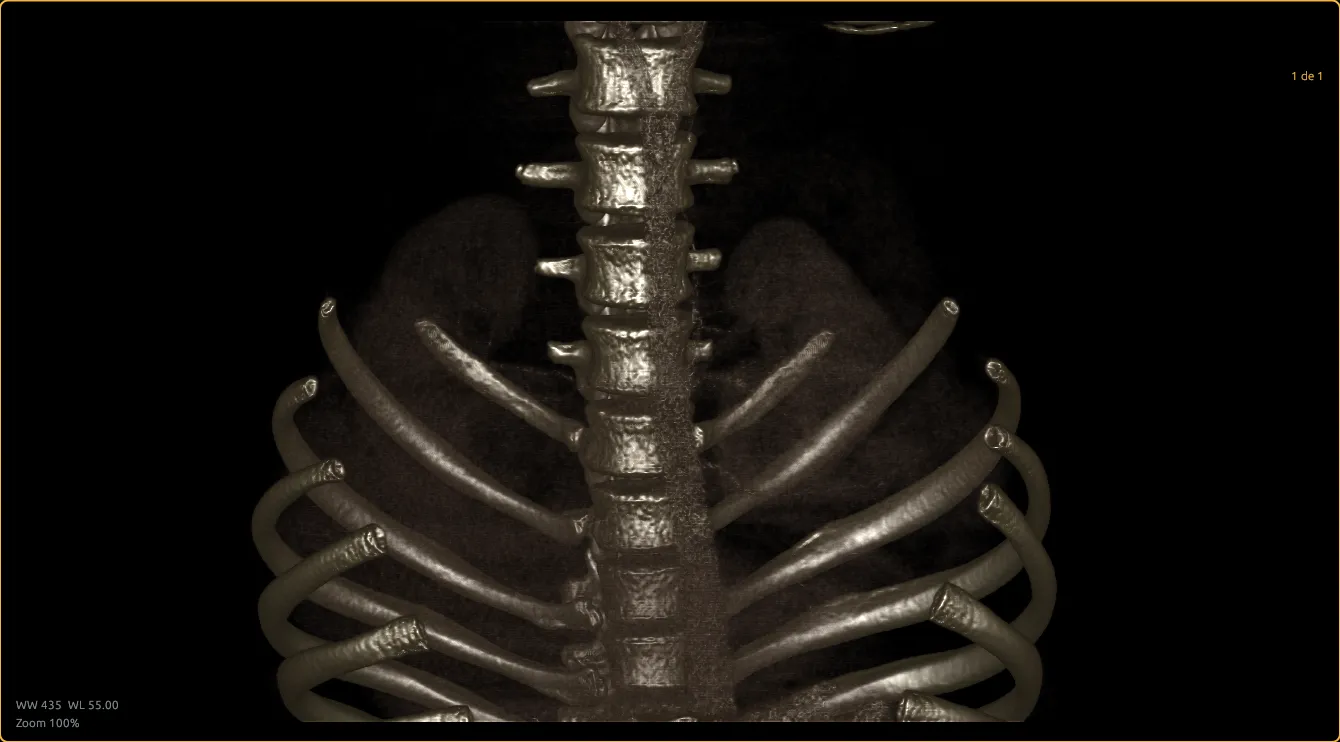
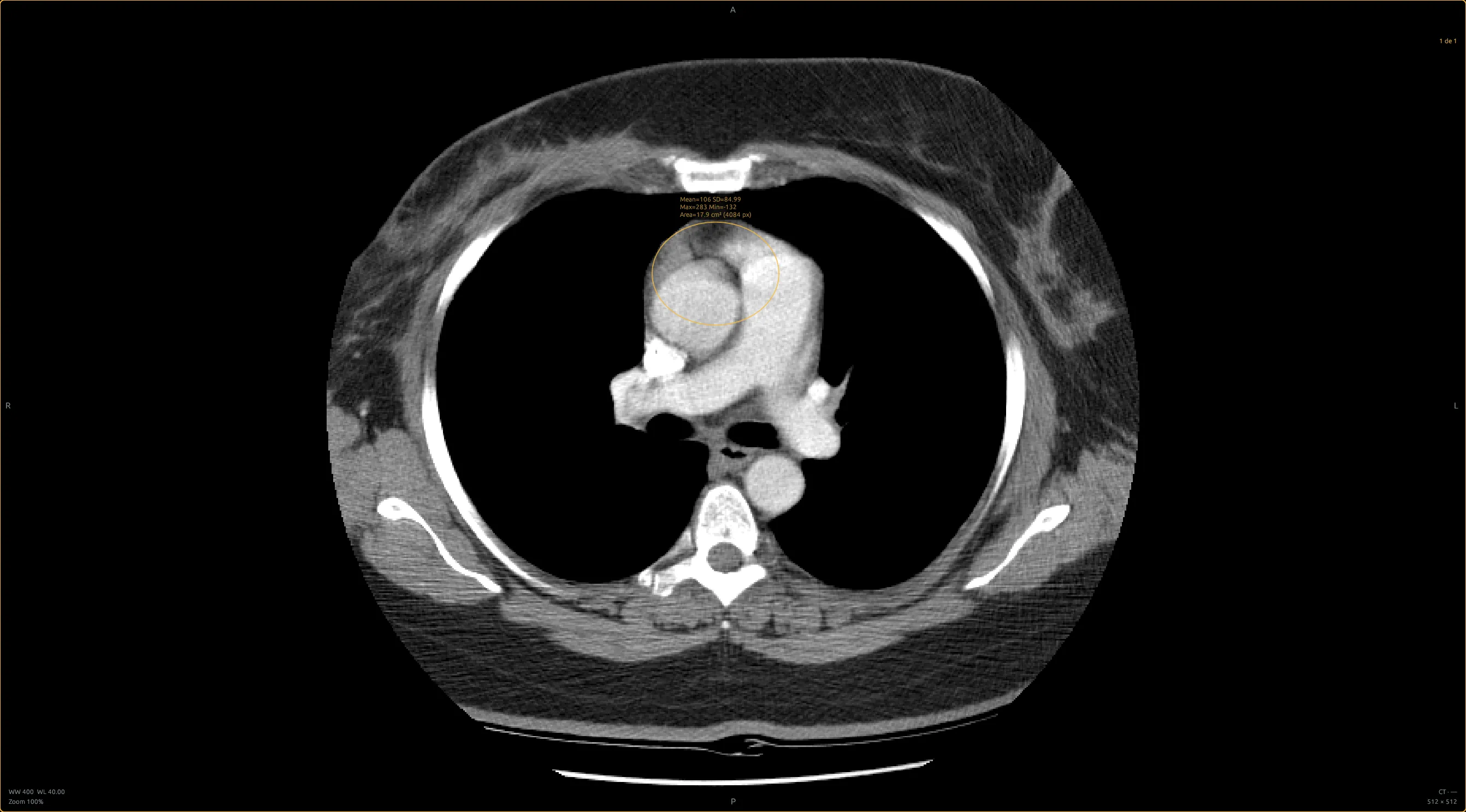
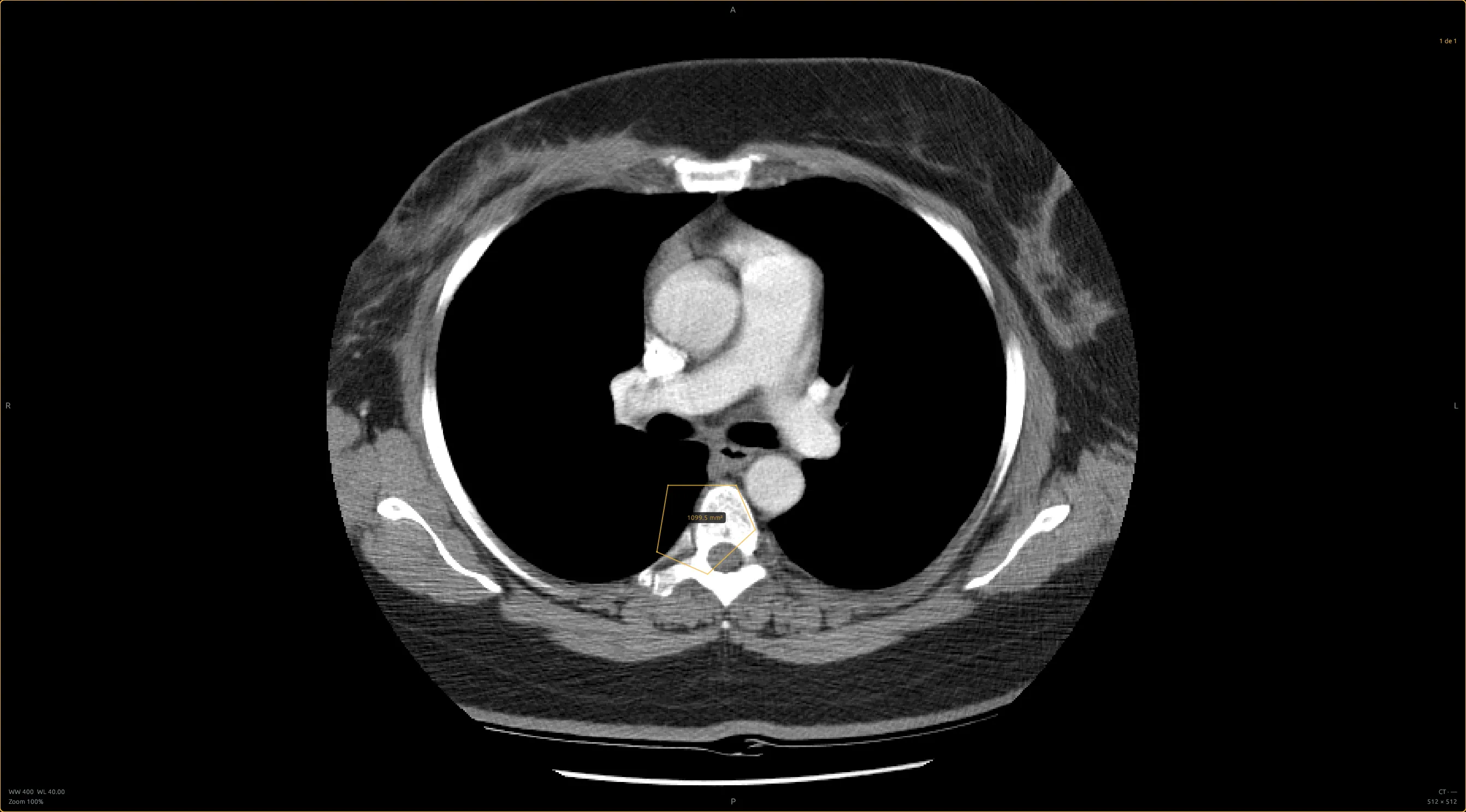
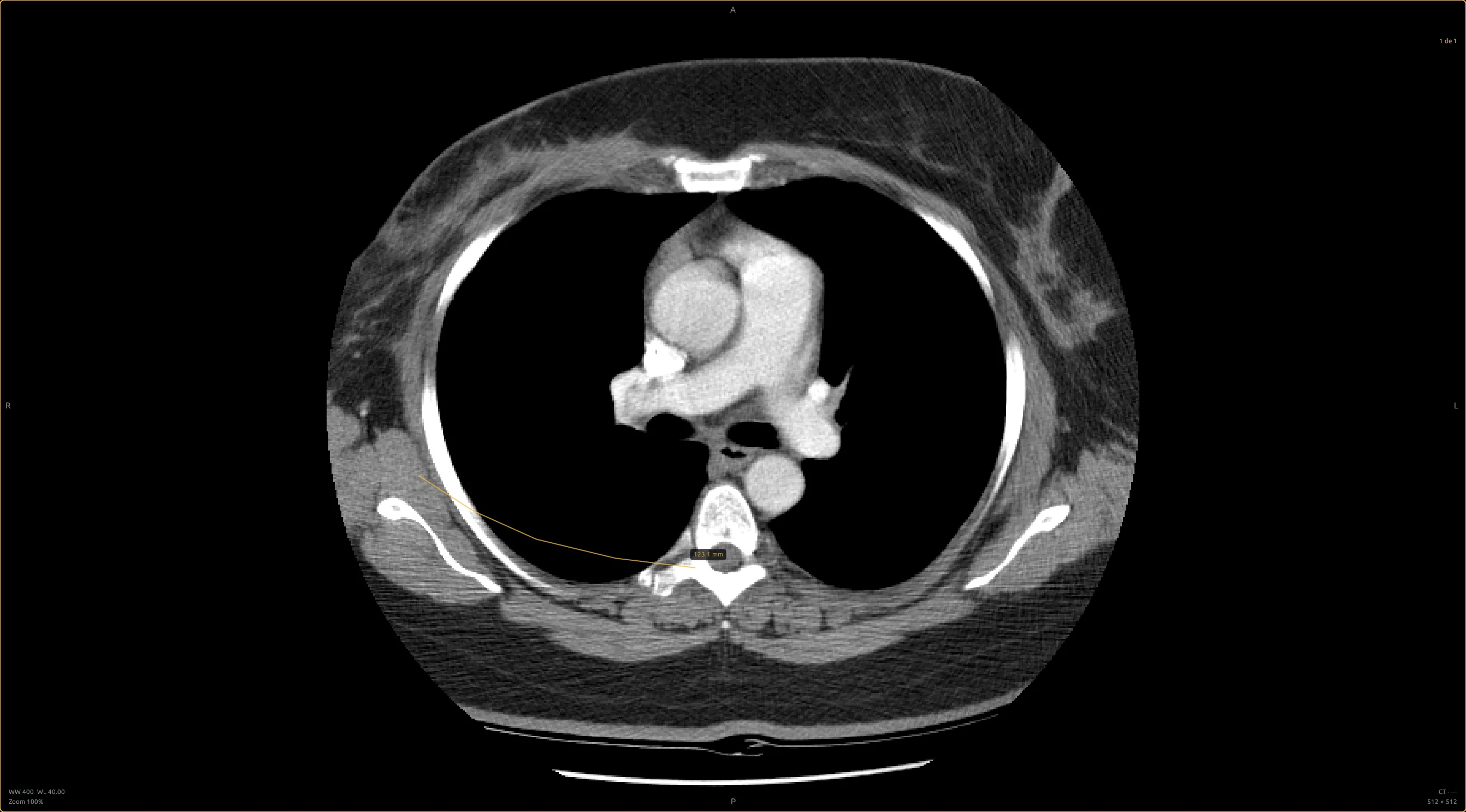
This is how the DICOM viewer looks today.
Real captures of Akhet opening public DICOM samples. Multiplanar reconstruction (MPR), 3D volume rendering and the measurement tools — all in the same dark interface, with clinical information in the corners.
Roadmap · where this is going
From viewer to complete PACS
Five phases, in order, documented with a study of six competitors. Each phase only starts when the previous one is in real use.
- 01In development
DICOM Viewer
The clinical core already works. The study browser and installers are missing.
- Zoom, pan and window/level — done
- Measurements and annotations — done
- Multi-series and multi-viewport — done
- Triplanar MPR — done
- 3D volume rendering — done
- Study browser — next
- Windows and macOS installers — next
- 02Planned
Mini PACS
The study stops being a file and becomes a searchable archive.
- Study import
- Organization by patient
- Search and study indexing
- Local storage
- Internal sharing
- 03Planned
Complete PACS
Akhet becomes a server: modalities send straight to it.
- DICOM server
- Query/Retrieve and C-STORE
- Worklist and modality integration
- User management and auditing
- High availability
- 04Planned
Clinical platform
Integration with the rest of the hospital, from RIS to the browser.
- RIS and HIS integration
- HL7 and FHIR
- Web viewer
- Desktop and mobile apps
- 05Planned
Artificial intelligence
Support for the radiologist on top of the base the previous phases built.
- Diagnostic support
- Organ segmentation
- Change detection
- Clinical research tools
Founders · 10 seats
The first 10 clinics never pay.
One subscription covers the whole clinic — every workstation, the whole team. The first ten never pay: they reserve their seat now and lock in free-for-life for when the installers are ready. After them, each tier of ten customers rises R$ 0.50 a month.
- Free1—10
- R$ 5,0011—20
- R$ 5,5021—30
- R$ 6,0031—40
- R$ 6,5041—50
FreeForever — the whole clinic, every workstation included.
- Free for life — no card, no deadline
- Every machine and the whole team, no per-seat charge
- A direct line to me — no tickets, no support queue
- What your practice needs goes to the front of the roadmap
- Akhet adapts to your workflow — not your workflow to Akhet
A direct line to the person building it: you ask for what your practice needs and watch the change land — no tickets, no support queue.
Claim a founder seatOnce the ten are taken, this tier closes and does not reopen. After that, each customer pays R$ 5,00 per month.
One subscription per clinic or professional, per month, covers unlimited machines and users, in Brazilian reais. The price of the tier you join never changes while your subscription runs — increases apply only to new customers.
Engineering
Medical software
taken seriously.
Medical imaging software is used for years and carries patient data. These guarantees are not promises in a document: they are verified by the compiler and by CI on every commit.
- Architecture enforced by the compiler
- Hexagonal layers where the dependency rule is checked at build time: the domain knows no database, the presentation knows no GPU.
- Discipline you can audit
- At most 200 lines per file, tests separated from code, zero unwrap in production — all verified by custom CI gates.
- Patient data is sacred
- PHI never touches a log, telemetry or session recording. It's not a policy written in a document: the type system prevents it.
- Reproducible by default
- Every session can be recorded and replayed event by event against the current build. Nothing depends on remembering what happened.
Build with us
A PACS is not built alone.
I'm looking for people who want to build real medical software — in Rust, with clean architecture and tests over real studies. You help shape an application you'll be proud of, from the foundation up.
Distribution and installers
CI already compiles on Windows and macOS. What's missing is turning that into installers a clinic can download and use — today it's the project's biggest blocker.
Study browser and local index
The SQLite index exists and compiles. It needs to be wired to the interface so each session doesn't start from zero.
DICOM domain
Compressed transfer syntaxes, new modalities, SUV/PET, anonymization. If you know the standard, there's fertile ground here.
Clinical eye
Radiologists and technologists who want to shape, over real studies, the tool they'd want to use every day.
Interested? Write about what you do well — Rust, DICOM or clinic routine — and where you'd like to start. Access to the project is arranged in that conversation.
Frequently asked questions
What clinics ask before joining.
What is Akhet PACS?
Akhet is a native, high-performance DICOM viewer that is evolving into a complete PACS system for clinics, hospitals and diagnostic imaging centers.
Is Akhet PACS free?
The first 10 founding clinics use Akhet for free, forever — the whole clinic, with every workstation included. After that the price climbs in steps and stops at a ceiling below that of an imported viewer.
Which modalities and studies does Akhet support?
The clinical core already works on real studies from CT, MR, ultrasound, mammography and angiography.
Which viewing features work today?
Window/level, multi-viewport, multiplanar reconstruction (MPR), 3D volume rendering, and measurement tools — Cobb angle, free angle, elliptical ROI, polygon and freehand.
What stage is the project at?
Akhet is in phase 1 of 5 on the roadmap, with a working clinical core. What is still missing is the study browser and the Windows and macOS installers.
Which operating systems does Akhet run on?
It is a native desktop application for Windows, macOS and Linux. The Windows and macOS installers are still in development.
I run a clinic. How do I join?
Message us on WhatsApp telling us which modalities you use. We reach out as soon as there is a build for your system, and your practice goes into the queue of what gets built next.
How can I contribute to the project?
The project is looking for people to build real medical software — in Rust, with clean architecture and tests over real studies. Access is arranged in a conversation.
For clinics
Do you work with medical imaging?
If you're from a clinic or diagnostic center, write telling us which modalities you use. We'll get in touch as soon as there's a build for your system — and your practice goes into the queue of what gets built next.